
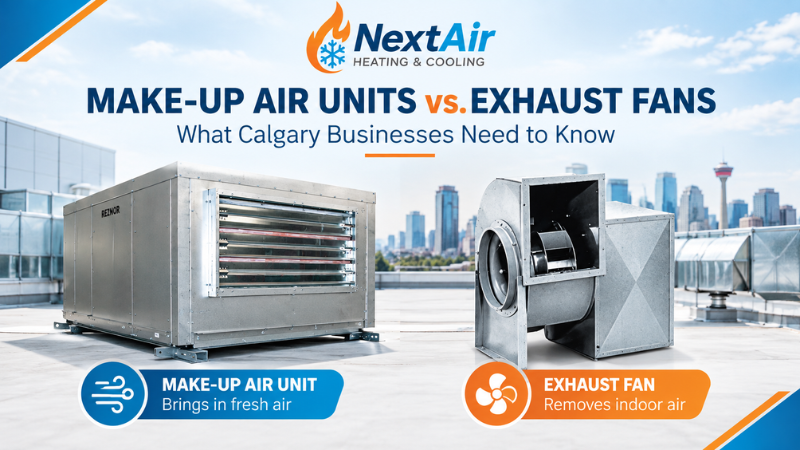
Make-Up Air Units vs. Exhaust Fans: What Calgary Businesses Need to Know
Commercial buildings rely on effective ventilation to maintain indoor air quality, manage airflow, and create a comfortable working environment. For businesses operating commercial kitchens, warehouses, manufacturing facilities, automotive shops, and other industrial spaces, two essential components are make-up air units and exhaust fans. Although these systems perform different functions, they often work together to maintain proper building ventilation. For example, when an exhaust fan removes air without an adequate replacement air supply, a building may develop negative pressure. As a result, occupants may experience uncomfortable drafts, reduced ventilation performance, and increased heating demands. Understanding how commercial make-up air units differ from exhaust fans can help Calgary business owners make informed decisions about ventilation system design, maintenance, and repairs. What Is a Commercial Make-Up Air Unit? A commercial make-up air unit (MUA) supplies outdoor air to replace the air that exhaust fans, kitchen hoods, and other ventilation equipment remove from a building. In many commercial applications, the system filters and heats outdoor air before supplying it to occupied spaces. This step becomes particularly important in Calgary, where cold winter temperatures can make untreated outdoor air uncomfortable and increase indoor heating demands. Depending on the application, a make-up air unit may include filters, heating components, supply fans, temperature controls, and other equipment that delivers the required airflow. Businesses commonly use commercial make-up air units in: With proper design and installation, a make-up air system helps balance incoming and outgoing airflow. Consequently, it supports indoor comfort and helps exhaust equipment operate as intended. What Is a Commercial Exhaust Fan? A commercial exhaust fan removes unwanted air from a building or a specific area. Depending on the application, this air may contain excess heat, moisture, cooking odours, airborne contaminants, or other substances that require safe removal. Commercial HVAC professionals install exhaust systems on rooftops, exterior walls, and within dedicated ventilation ductwork. The installation location depends on the building layout and the type of air the system needs to remove. Typical applications include: The building’s use, ventilation requirements, and the materials being removed determine the appropriate fan type, capacity, and placement. For effective performance, the exhaust fan must also work with the building’s overall ventilation strategy. Otherwise, the system may remove air faster than the building can replace it, potentially creating pressure imbalances. Make-Up Air Units vs. Exhaust Fans: Key Differences The main difference is simple: an exhaust fan removes indoor air, while a make-up air unit supplies replacement outdoor air. Feature Make-Up Air Unit Commercial Exhaust Fan Primary function Supplies replacement outdoor air Removes unwanted indoor air Airflow direction Into the building Out of the building Typical equipment Supply fan, filters, heating components, and controls where required Fan, motor, housing, and associated controls Main purpose Supports air balance and replacement air supply Removes heat, moisture, odours, and contaminants Common applications Commercial kitchens, warehouses, and industrial facilities Kitchen hoods, workshops, and industrial exhaust systems Maintenance priorities Filters, burners where fitted, motors, controls, and airflow Fan blades, belts where fitted, motors, bearings, and airflow Neither system automatically replaces the other. Instead, a building may need an exhaust fan, a make-up air unit, or a coordinated combination of both. The right choice depends on the facility’s ventilation requirements and operating conditions. Why Commercial Buildings May Need Both Systems Whenever an exhaust fan removes indoor air, replacement air must enter the building. If the intended replacement air supply cannot keep up, the building may develop negative pressure. Negative pressure occurs when more air leaves a space than enters through the intended supply and other available openings. In commercial buildings, this imbalance can create several operational and comfort problems. 1. Doors Become Difficult to Open Excessive negative pressure can make exterior doors harder to open. It may also create noticeable drafts around entrances. Consequently, employees, customers, delivery personnel, and other occupants may experience inconvenience during daily operations. 2. Cold Air Enters Through Uncontrolled Openings During Calgary’s colder months, insufficient replacement air can cause outdoor air to enter through door gaps, loading bays, and other openings. As a result, businesses may experience cold spots, uncomfortable working conditions, and increased heating demands. A properly designed make-up air system helps control where replacement air enters the building and how the system conditions that air. 3. Kitchen Exhaust Performance May Suffer Commercial kitchens rely on exhaust hoods to capture cooking heat, smoke, and grease-laden vapours. However, inadequate replacement air can disrupt the intended airflow and affect hood performance. For this reason, a well-designed ventilation system must account for exhaust capacity, replacement air, hood configuration, and the interaction between connected equipment. 4. Heating Systems May Work Harder When a building exhausts large amounts of heated indoor air, cold outdoor air must replace that lost air. Consequently, the heating system may consume more energy to maintain the desired indoor temperature. A properly selected and controlled make-up air unit can condition incoming air and reduce unnecessary heating demand compared with uncontrolled air infiltration. However, actual energy performance depends on system design, operating conditions, controls, and maintenance. 5. Combustion Safety May Be Affected In buildings with fuel-burning equipment, significant negative pressure can interfere with combustion air supply. Under certain conditions, it may also cause exhaust gases to flow in the wrong direction. This situation presents a potential safety concern, not simply a comfort problem. Therefore, qualified professionals should assess persistent pressure imbalances and any suspected combustion or exhaust issues. How to Choose the Right Ventilation System for Your Business Selecting commercial ventilation equipment involves more than comparing fan sizes or choosing a unit based solely on floor area. Instead, businesses should consider how they use the building, how much air their equipment exhausts, occupancy levels, heat loads, equipment layouts, and applicable ventilation and building requirements. Different facilities also have different ventilation priorities. Here is how those needs can vary by industry. Restaurants and Commercial Kitchens Commercial kitchens often need exhaust fans to remove cooking emissions and make-up air systems to supply replacement air. The ventilation design should account for the exhaust hood, cooking equipment, building pressure,